 Featured Machines
 Travel CPAPs
 Most Popular Masks
 Tubes and Hoses
 Humidifier Chambers
 Machine Filters
 Power Cords
 Headgear
 Nasal Pillows
 Cushions and Seals



Home Testing Versus Polysomnography: Which Fits?

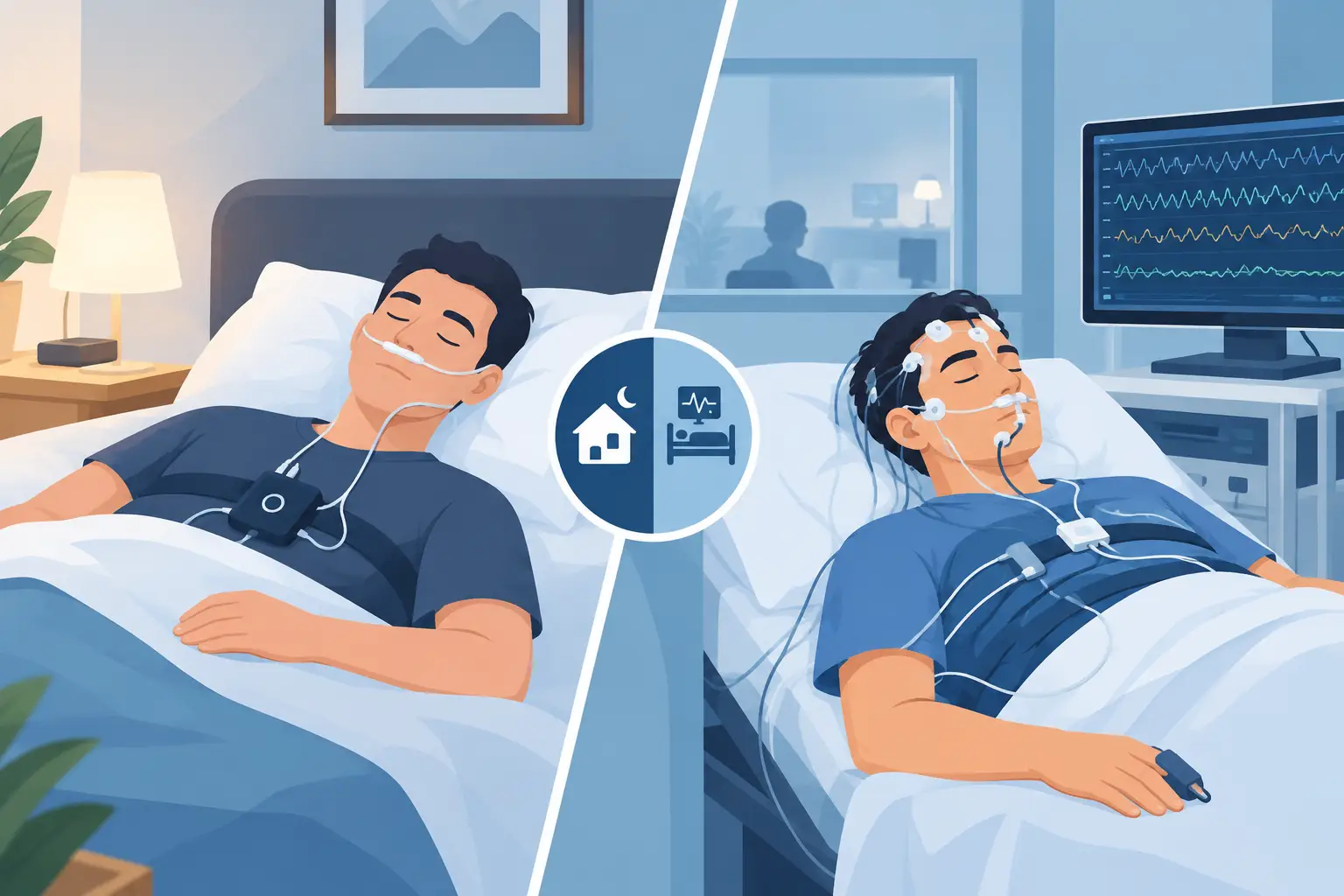
A partner notices the pauses first: loud snoring, a quiet gap in breathing, then a gasp that breaks the silence. By morning, you may feel as though you barely slept. When comparing home testing versus polysomnography, the question is not which test is more impressive. It is which test can give your care team the right answers while making the path to better sleep feel manageable.
For many adults with a strong likelihood of obstructive sleep apnea, a home sleep apnea test can be a convenient first step. For others, an overnight sleep study in a sleep center remains the safer, more complete choice. Both tests have a role. The right one depends on your symptoms, health history, and what your clinician needs to evaluate.
What Each Sleep Test Measures
A home sleep apnea test, often called HSAT, is designed primarily to identify obstructive sleep apnea. You use the compact device in your own bed, following instructions for sensors that typically track breathing effort, airflow, blood oxygen levels, and heart rate. Some devices also record body position and snoring.
Because you sleep in your usual environment, home testing can feel more natural than spending a night away from home. There are no cameras, unfamiliar rooms, or extensive wires. After the test is completed, a qualified provider reviews the recording and discusses what the results mean for your next steps.
Polysomnography, often shortened to PSG, is a more comprehensive overnight study usually completed at a sleep center. In addition to breathing and oxygen levels, it measures brain activity, eye movements, muscle activity, heart rhythm, leg movements, and actual sleep stages. That wider view helps clinicians evaluate sleep conditions beyond straightforward obstructive sleep apnea.
The distinction matters: a home test estimates breathing events during the time you are recording, while a polysomnogram can show what happens during each stage of sleep. More information is not automatically necessary, but it can be essential in the right circumstances.
Home Testing Versus Polysomnography: The Practical Difference
For an adult who snores heavily, wakes up choking or gasping, has witnessed breathing pauses, and feels sleepy during the day, home testing is often an appropriate and efficient option. It can reduce the delay between recognizing a problem and beginning treatment. You may be able to complete the test without taking time off work or arranging an overnight stay outside your home.
Home testing also supports privacy. If the idea of sleeping in a monitored facility makes you uneasy, testing at home may help you rest more normally. That comfort can make it easier to take the first step toward care, especially when fatigue has already made daily life harder.
Polysomnography may be recommended when your symptoms or medical history suggest the picture could be more complex. The study is more involved, but its depth can prevent important issues from being missed. A sleep center can also provide closer observation throughout the night and, in some cases, allow treatment adjustments during the study.
Cost and insurance coverage can differ, too. Home testing is commonly less expensive than an in-lab study, though your out-of-pocket cost depends on your plan, deductible, provider network, and clinical requirements. Insurance verification before moving forward can help you understand your options without surprises.
When a Home Sleep Apnea Test May Be a Good Fit
Home testing is generally intended for adults with a high likelihood of moderate to severe obstructive sleep apnea and without certain complicating health conditions. Symptoms that may point toward obstructive sleep apnea include persistent loud snoring, witnessed pauses in breathing, gasping during sleep, morning headaches, dry mouth, trouble concentrating, and unrefreshing sleep.
Your provider will look beyond symptoms alone. Factors such as your medical history, medications, prior sleep testing, and concerns raised by a bed partner all help determine whether a home test is appropriate. The goal is not simply to confirm a diagnosis. It is to choose a testing route that is reliable enough to guide safe treatment.
A home test can be especially practical if you are balancing work, caregiving, travel, or limited access to a nearby sleep center. It can also be a comfortable option for someone who is ready to address symptoms but wants a simpler entry point into sleep care.
Still, home testing has limits. It does not directly measure sleep stages, so it can underestimate the severity of apnea if you spend much of the recording awake. Sensor issues, limited sleep time, or an inconclusive result can also mean further testing is needed. A negative home test does not always rule out sleep apnea when symptoms remain convincing.
When Polysomnography May Be the Better Choice
An in-lab polysomnogram may be more appropriate if there is concern for another sleep disorder or a condition that can affect breathing during sleep. That can include suspected central sleep apnea, certain heart or lung conditions, neuromuscular disease, long-term opioid use, a history of stroke, or significant insomnia that could interfere with home-test accuracy.
PSG can also help when symptoms suggest restless legs or periodic limb movements, unusual behaviors during sleep, possible narcolepsy, or episodes that could reflect seizures. These concerns require measurements a standard home sleep apnea test does not provide.
A clinician may recommend polysomnography after an inconclusive or negative home test if you continue to have loud snoring, witnessed breathing interruptions, or substantial daytime sleepiness. This is not a setback. It is a careful next step when the original test did not fully explain what is happening.
Some patients also need an in-lab study to guide more complex positive airway pressure therapy. If standard CPAP treatment is not well tolerated or if a provider suspects a different breathing pattern, detailed monitoring can help identify the most effective approach.
Choosing the Test Is Only the Beginning
A sleep test is valuable because it leads to a clear care plan. If obstructive sleep apnea is diagnosed, positive airway pressure therapy is one of the most common and effective treatments. Modern CPAP and Auto CPAP devices are designed to support steady breathing throughout the night, and features such as humidification, quiet operation, and automatic pressure adjustment can make therapy easier to live with.
Comfort deserves real attention from the start. A nasal mask, nasal pillows, or a full-face mask may each be a better fit depending on how you breathe, whether you experience congestion, and what feels comfortable as you sleep. The best mask is not the one that works for someone else. It is the one that seals well enough to deliver therapy while allowing you to rest.
Ongoing support also matters. Prescription requirements, insurance questions, replacement schedules, and small comfort adjustments can feel like barriers when you are already tired. A connected home-care pathway, such as the support available through Sleep Restoration Center, can help bring virtual consultation, testing, prescription guidance, and therapy equipment into one more straightforward experience.
How to Prepare for a Useful Conversation
Before your consultation, think about what happens at night and how you feel during the day. If possible, ask a partner or family member what they have noticed. Mention snoring volume, breathing pauses, gasping, frequent awakenings, sleepwalking or unusual movements, and how often fatigue affects driving, work, or mood.
Bring up medical conditions and medications honestly, even if they seem unrelated to sleep. Your provider needs that context to decide whether a home test can answer the question safely or whether polysomnography is the wiser choice. If you have urgent symptoms, such as severe daytime sleepiness while driving, seek timely medical guidance and avoid driving when you do not feel alert.
The most convenient test is not always the right test, and the most detailed test is not always necessary. What matters is getting a dependable answer and a care plan you can follow night after night. With the right evaluation and the right support, breathing better and sleeping deeper can become a realistic part of your routine.