 Featured Machines
 Travel CPAPs
 Most Popular Masks
 Tubes and Hoses
 Humidifier Chambers
 Machine Filters
 Power Cords
 Headgear
 Nasal Pillows
 Cushions and Seals



Can Home Tests Miss Apnea? What to Know

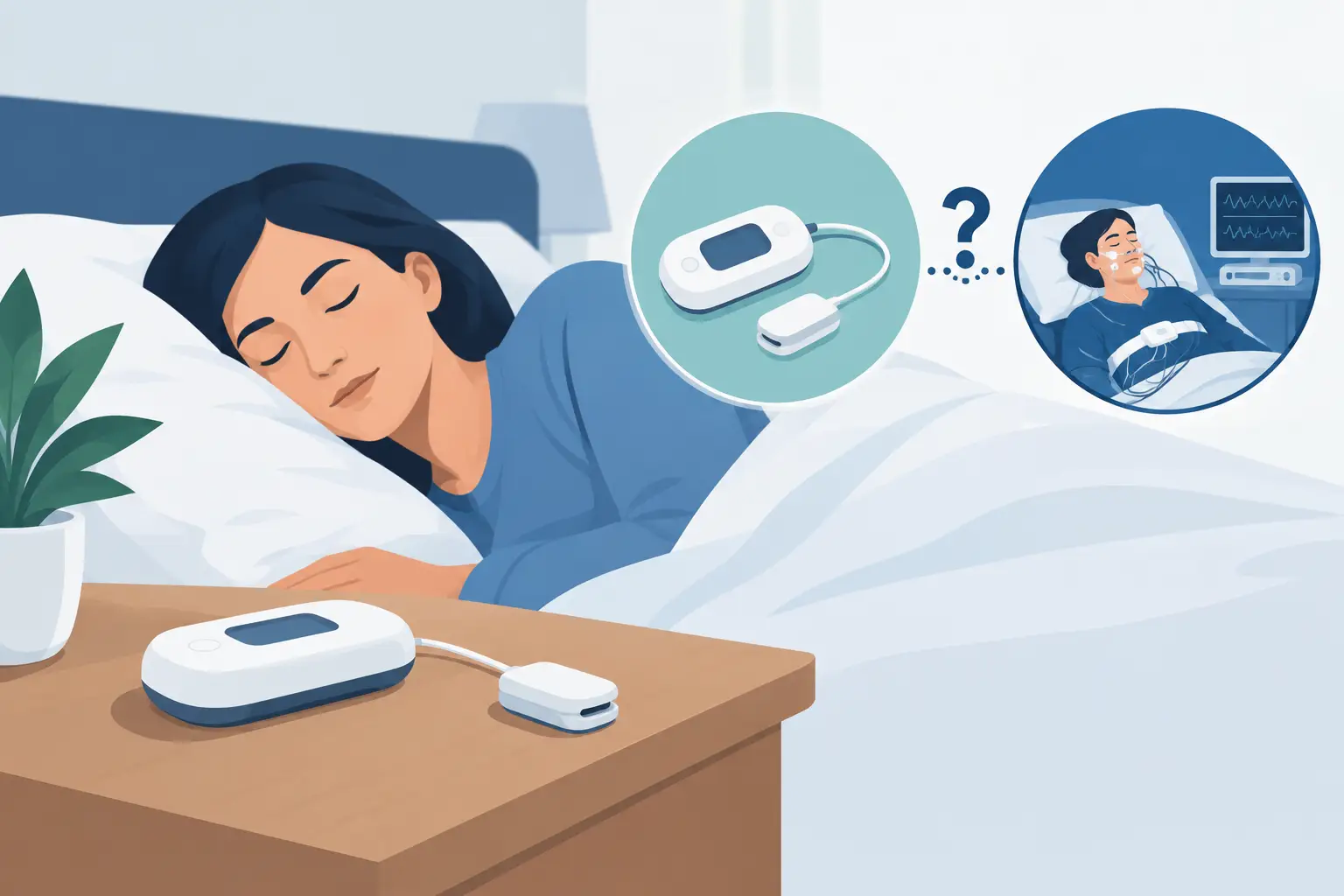
A home sleep apnea test can be a convenient first step when loud snoring, witnessed pauses in breathing, morning headaches, or daytime exhaustion are getting in the way of restorative sleep. But can home tests miss apnea? Yes. A negative home test does not always rule out sleep apnea, particularly when symptoms are strong or the test did not capture a typical night.
That does not mean home testing is unreliable or that you have done anything wrong. For many adults with a high likelihood of moderate to severe obstructive sleep apnea, a properly ordered and interpreted home test provides useful, actionable answers from the comfort and privacy of home. The key is knowing what the test measures, what it may not capture, and what to do if the result does not match how you feel.
Can home tests miss apnea?
Home sleep apnea tests are designed primarily to identify obstructive sleep apnea, the common condition in which the airway repeatedly narrows or closes during sleep. Most devices measure breathing effort, airflow, oxygen levels, heart rate, and sometimes snoring or body position. They do not usually measure brain activity, which is how an in-lab sleep study confirms whether you are awake or asleep.
That difference matters. A home test may record for eight hours, but you may have slept for only six. Because the device cannot always tell the difference, it can calculate breathing events across more time than you were actually asleep. This can make apnea appear milder than it is.
A home test can also miss events that occur mainly during REM sleep, when you sleep on your back, or during a night that simply was not representative of your usual sleep. If you happen to sleep lightly, remove a sensor, have nasal congestion, or spend less time asleep than usual, the data may not show the full picture.
Why a false negative can happen
A false negative means the test does not identify sleep apnea even though it is present. It is less common when a person has classic symptoms and moderate to severe obstructive sleep apnea, but it can happen for several reasons.
Your apnea may be mild or intermittent
Breathing interruptions do not always happen at the same rate every night. Alcohol near bedtime, certain medications, nasal congestion, sleep position, and how much REM sleep you get can all influence the number of events. Someone whose apnea is largely positional may have a quieter night if they spend little time sleeping on their back.
Mild apnea can be especially easy to underestimate. Even a smaller number of breathing disruptions may leave you feeling unrefreshed, affect concentration, or worsen high blood pressure. Your symptoms and medical history deserve attention even if a single home test is negative.
The equipment may not get a clean recording
Home testing works best when sensors stay in place and the equipment is worn exactly as instructed. A loose airflow cannula, an oxygen sensor that shifts during the night, or a device that is turned on too late can reduce the quality of the recording. Sometimes the test is considered technically inadequate and needs to be repeated rather than interpreted as a truly negative result.
Home tests do not evaluate every sleep disorder
Home testing is focused on obstructive sleep apnea. It is not usually the best stand-alone option for diagnosing conditions such as central sleep apnea, periodic limb movements, narcolepsy, parasomnias, or significant insomnia. It may also be less appropriate when a person has certain heart, lung, or neuromuscular conditions, uses opioid medications, or may need oxygen during sleep.
An overnight study in a sleep center includes more detailed monitoring, such as sleep stages, brain activity, leg movements, and heart rhythm. That broader view can help a clinician understand symptoms that a home test cannot fully explain.
A negative result is not always the end of the conversation
If your home test says you do not have sleep apnea but you regularly wake gasping, have witnessed breathing pauses, snore loudly, or feel persistently sleepy during the day, follow up with the clinician who ordered the test. This is especially true if you have high blood pressure, atrial fibrillation, type 2 diabetes, a history of stroke, or a family history of sleep apnea.
Your clinician may recommend repeating the home test, particularly if there was a sensor problem or an unusual night of sleep. They may also recommend an in-lab polysomnogram. That is not a setback. It is a more detailed next step when the first test and the clinical picture do not line up.
A diagnosis should never rest on a device number alone. A qualified clinician considers your symptoms, sleep habits, health conditions, medications, and test data together. That approach helps prevent both missed apnea and unnecessary treatment.
How to get the most useful home test results
You cannot control every part of a night’s sleep, but a few practical steps can improve the chance of a clear recording. Follow the device instructions closely, and ask questions before test night if anything feels unclear. Apply sensors right before bed, make sure the nasal tubing and finger sensor are secure, and keep the device within reach if you need to check it during the night.
Try to follow your normal routine. Do not deliberately sleep in an unfamiliar position or change your usual bedtime just to make the test go smoothly. Unless your clinician gives different instructions, avoid alcohol close to bedtime because it can worsen airway collapse and make the night less representative in other ways. If you use prescribed medication, do not stop it without medical guidance.
If nasal congestion is making it hard to breathe through your nose, let your care team know. Congestion can affect comfort with the nasal sensor and may also affect your breathing during sleep. A clinician can help you decide whether to proceed, repeat the test later, or use a different approach.
When an in-lab sleep study may be the better choice
An in-lab study is often worth considering after a negative or inconclusive home test when symptoms strongly suggest apnea. It may also be preferred from the start if there is concern for central sleep apnea, complex medical conditions, severe insomnia, unusual nighttime behaviors, or another sleep disorder beyond obstructive apnea.
The sleep center setting is more comprehensive, but it is not automatically necessary for everyone. Home testing offers a practical path for many people who are likely to have uncomplicated obstructive sleep apnea and want to begin the evaluation without repeated in-person appointments. The right choice depends on your health history and the clinical question, not on which option seems more convenient on paper.
If apnea is found, treatment can stay close to home
A positive home test is only the beginning of a care plan, not the end of it. For many people, positive airway pressure therapy helps keep the airway open so the body can get the oxygen and uninterrupted sleep it needs. Modern CPAP and Auto CPAP devices are designed for at-home use, with features such as automatic pressure adjustment, quiet operation, and humidification to support comfort.
Mask comfort matters just as much as machine settings. Some people breathe best with a full-face mask, while others prefer a nasal mask or nasal pillows. It can take a little adjustment to find the fit that feels natural enough to use consistently. Ongoing support, replacement cushions and filters, and regular check-ins can make therapy feel like a manageable nightly routine rather than another burden.
If your symptoms persist after a negative test, trust that signal from your body and ask for a closer look. Clear answers are worth pursuing, because breathing better at night can be the first step toward more energy, sharper mornings, and a genuinely rejuvenating night’s sleep.