 Featured Machines
 Travel CPAPs
 Most Popular Masks
 Tubes and Hoses
 Humidifier Chambers
 Machine Filters
 Power Cords
 Headgear
 Nasal Pillows
 Cushions and Seals



Why Does CPAP Cause Bloating? Relief That Works

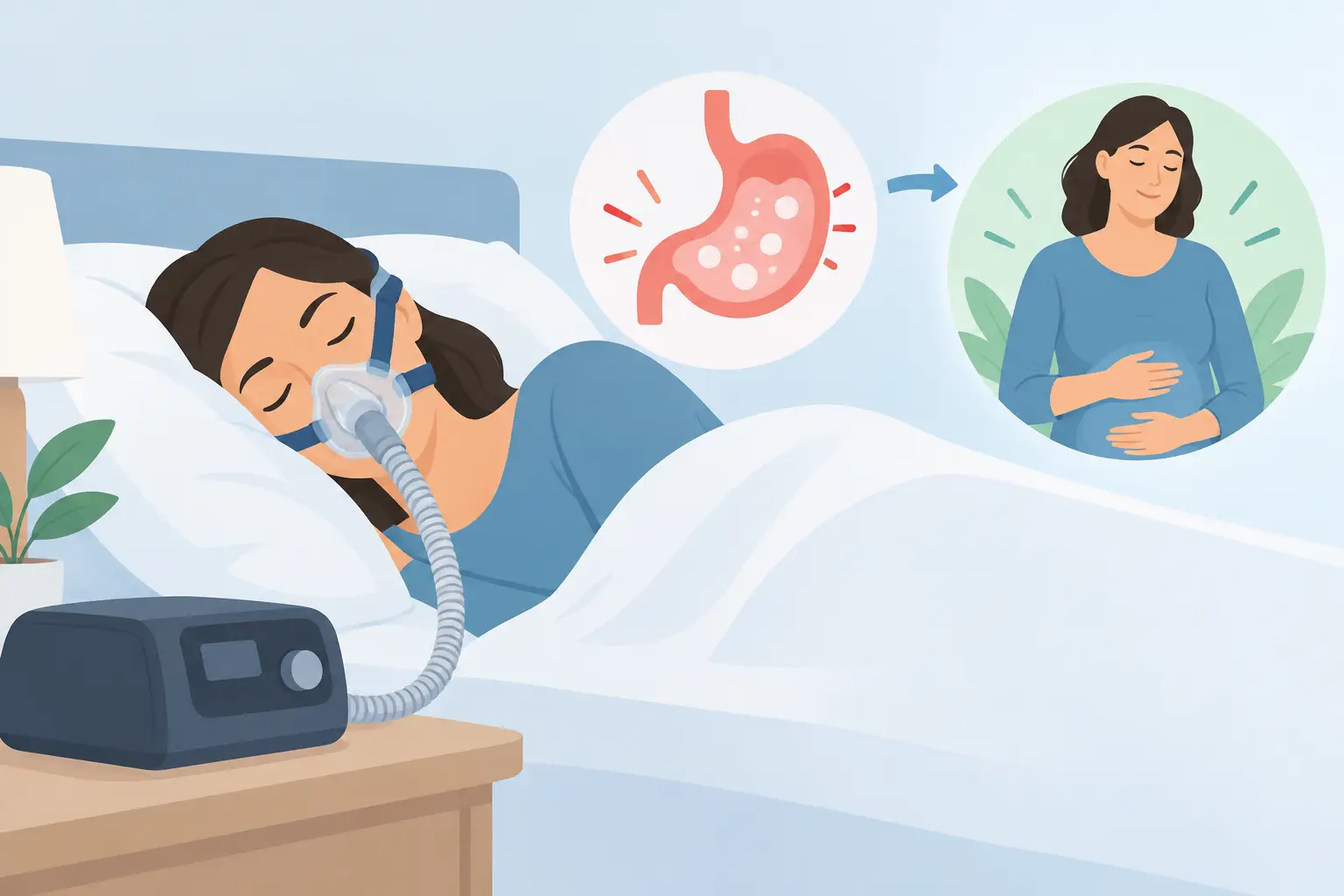
Waking up with a tight, gassy stomach can make a successful night of CPAP feel anything but restorative. If you are asking, why does CPAP cause bloating, the usual answer is that some of the pressurized air meant to keep your airway open is reaching your stomach instead. This is called aerophagia, or air swallowing. It is common, manageable, and worth addressing early so discomfort does not get in the way of the deeper, healthier sleep your therapy is designed to provide.
Why Does CPAP Cause Bloating and Gas?
CPAP delivers a steady stream of air through your mask to prevent the airway from collapsing during sleep. That air should travel into your lungs, but it can sometimes enter the esophagus and stomach. Once there, it may cause burping, abdominal fullness, cramping, flatulence, or a noticeably bloated feeling when you wake up.
Your body has a natural barrier at the lower end of the esophagus that helps keep stomach contents where they belong. During sleep, muscle relaxation, certain body positions, and higher air pressure can make it easier for air to pass that barrier. CPAP is not putting air into your stomach on purpose. Rather, the therapy settings, mask fit, breathing pattern, and digestive factors may be creating conditions where air swallowing is more likely.
A little morning gas can be temporary while you adjust to treatment. Ongoing discomfort deserves attention, especially if it causes you to remove your mask, skip therapy, or feel anxious at bedtime.
Pressure may be higher than you need at certain times
Pressure is one of the most common contributors to aerophagia. Some people need a higher setting to control obstructive events, but a pressure that is consistently too high for your needs can increase the chance of swallowing air.
This does not mean you should lower your own settings without guidance. Lowering pressure on your own can allow apnea events to return, reducing the health benefits of therapy. Your sleep care provider can review your treatment data and determine whether pressure changes, an auto-adjusting CPAP range, or a different therapy mode may improve comfort while still treating your sleep apnea effectively.
Mask leaks can lead to air swallowing
A leaky mask may seem like a minor annoyance, but it can affect more than noise and dry eyes. When air escapes around the cushion, some people respond by opening their mouth, tensing their jaw, or changing how they breathe. The machine may also increase pressure in an effort to maintain therapy. These changes can contribute to swallowed air.
A mask should feel secure, not painfully tight. Overtightening can distort the cushion and actually make leaks worse. If your mask shifts, leaves persistent marks, blows into your eyes, or requires frequent adjustments, a new cushion, different size, or another mask style may provide a more comfortable seal.
Mouth breathing and nasal congestion matter
For people using a nasal mask or nasal pillows, mouth opening during sleep can allow therapy air to escape. It can also make breathing feel less natural, which may encourage air swallowing. Nasal congestion from allergies, a cold, dry air, or structural nasal issues can make the problem worse.
Heated humidification may help reduce nasal dryness and irritation. Some people also benefit from addressing seasonal allergies or discussing persistent congestion with a clinician. A chin strap or a full-face mask may be appropriate in some cases, but the best choice depends on your breathing habits, comfort, and therapy data.
Your sleep position and digestion can play a role
Sleeping flat on your back may make both sleep apnea and aerophagia more likely for some people. Side sleeping, with your head and upper body slightly elevated if comfortable, can reduce pressure on the airway and may ease reflux-related symptoms.
Eating a large meal close to bedtime, drinking carbonated beverages, and consuming alcohol in the evening can add to overnight gas and abdominal pressure. Gastroesophageal reflux disease, known as GERD, can also overlap with CPAP bloating. CPAP often improves reflux symptoms for many users by supporting steadier breathing, but reflux and aerophagia can still need separate attention.
How to Reduce CPAP Bloating Without Sacrificing Therapy
The goal is not simply less gas. It is comfortable, effective therapy you can use consistently. Start by noticing patterns for several nights: when the bloating happens, whether you burp during the night, your sleep position, what you ate or drank late in the evening, and whether you noticed mask leaks or dry mouth. These details can help your provider identify the most likely cause.
First, check the basics of your equipment. Clean the mask cushion regularly because facial oils can weaken its seal. Inspect cushions, headgear, tubing, and connections for wear. A cushion that has become soft, stretched, or discolored may not seal as reliably as a fresh replacement. Make sure the mask type and size still fit your face well, especially if your weight, facial hair, dental work, or sleeping habits have changed.
Next, use comfort settings as prescribed. Many CPAP devices offer a ramp feature that starts at a lower pressure and gradually increases after you fall asleep. Exhalation relief may also make breathing out against pressure feel easier. These features are not a cure for every case of aerophagia, but they can make the transition into sleep more comfortable. If you are unsure how your machine is set, ask for help rather than experimenting with clinical settings yourself.
Your bedtime routine can matter, too. Give yourself time to digest dinner before lying down, keep late meals lighter when possible, and limit fizzy drinks in the evening. If reflux is part of the picture, elevating the head of the bed slightly may help. A wedge pillow can be more effective than stacking standard pillows, which may bend your neck or push your body into an uncomfortable position.
If nasal congestion is causing mouth breathing, focus on making nasal breathing easier. Use the humidifier as directed and keep the tubing and water chamber clean. For ongoing congestion, talk with a healthcare professional about safe options for your situation. Do not add oils or unapproved substances to your CPAP humidifier chamber.
When Your Provider May Adjust Your Treatment
If CPAP bloating continues despite good mask fit and routine changes, contact your sleep care team. They can review your machine data for leaks, residual apnea events, and pressure patterns. This review is especially useful for people using auto-adjusting CPAP, since it can show whether pressure increases are happening at certain points during the night.
A provider may decide that a small pressure adjustment is appropriate, particularly if your settings were established some time ago or your needs have changed. In other situations, switching mask styles can improve comfort. For people who need higher pressures and continue to struggle with aerophagia, bilevel therapy may be considered. Bilevel devices use different pressures for inhaling and exhaling, which can feel more natural for some users and may reduce discomfort in the right clinical situation.
The answer depends on why the bloating is happening. A lower pressure may help one person but undertreat apnea in another. A full-face mask can be a major improvement for a mouth breather yet feel unnecessary for someone whose nasal mask already seals well. Personalized adjustments are safer and more effective than a one-size-fits-all fix.
When Bloating Needs Prompt Medical Attention
Most CPAP-related air swallowing is uncomfortable rather than dangerous. Still, severe or new abdominal symptoms should not automatically be blamed on your machine. Seek urgent medical care for severe or worsening abdominal pain, repeated vomiting, a swollen and hard abdomen, inability to pass stool or gas, fever, chest pain, or trouble breathing.
You should also contact a clinician promptly if bloating is persistent, painful, or paired with frequent heartburn, unexplained weight loss, trouble swallowing, or changes in bowel habits. Those symptoms may point to a digestive condition that needs evaluation apart from sleep apnea therapy.
A More Comfortable Path to Better Sleep
CPAP bloating can be frustrating, but it does not mean treatment is failing or that you have to choose between a comfortable stomach and protected breathing. Often, a better mask seal, a refreshed cushion, a change in sleep habits, or a provider-guided adjustment makes a meaningful difference. Keep using therapy as directed whenever you can, document what you are feeling, and ask for support early. With the right fit and settings, CPAP can become the comfortable at-home routine that helps you breathe better and wake up ready for the day.