 Featured Machines
 Travel CPAPs
 Most Popular Masks
 Tubes and Hoses
 Humidifier Chambers
 Machine Filters
 Power Cords
 Headgear
 Nasal Pillows
 Cushions and Seals



4 Best CPAP Machines for Beginners to Consider

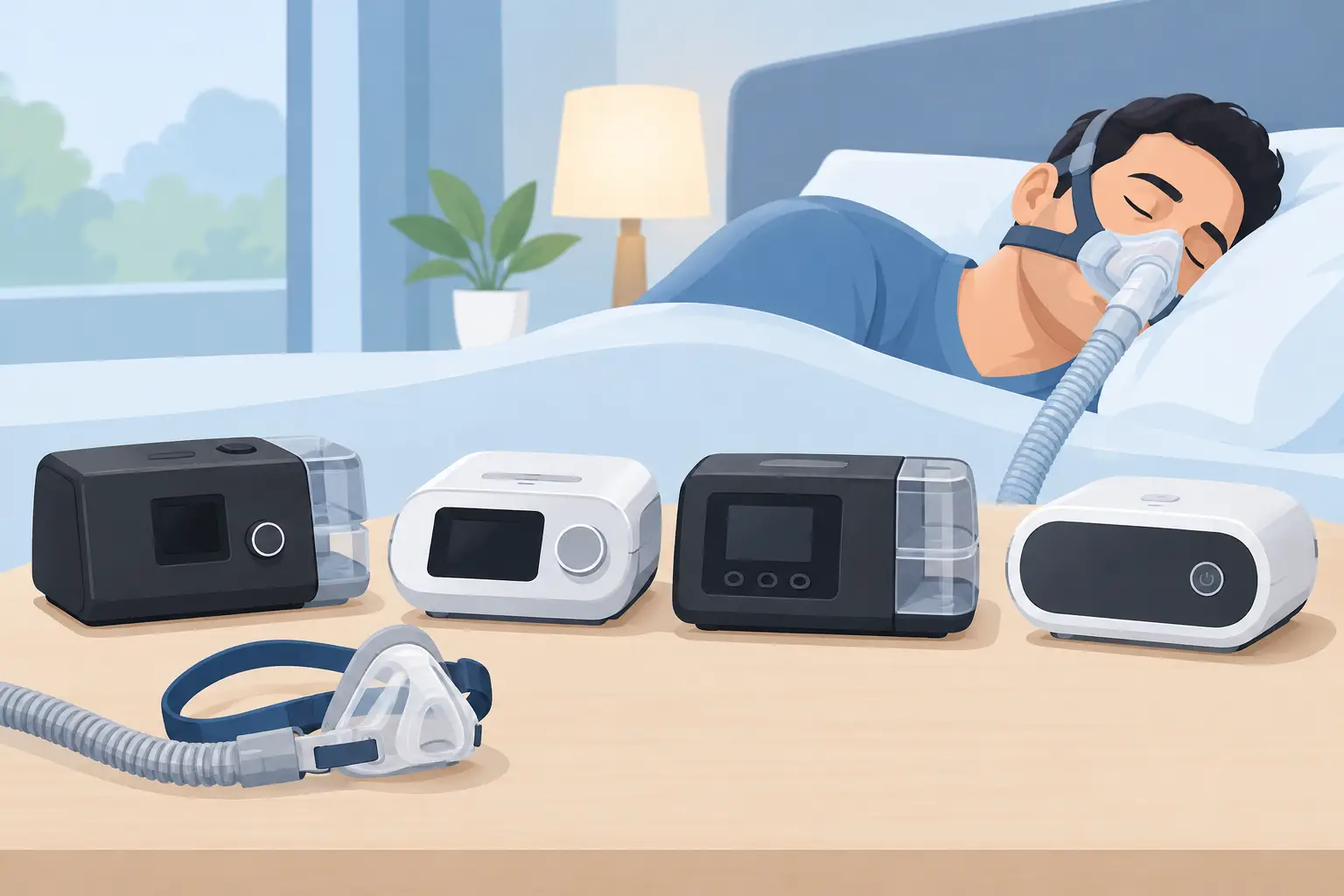
The best CPAP machines beginners choose are not necessarily the ones with the longest feature list. They are the ones that make nightly therapy feel approachable: easy to start, comfortable to use, quiet enough for the bedroom, and flexible enough to support better breathing as your needs change. For many people beginning treatment for obstructive sleep apnea, an auto-adjusting CPAP machine provides that reassuring balance.
A CPAP prescription is required before purchasing a machine. If you have symptoms such as loud snoring, waking up gasping, morning headaches, or persistent daytime fatigue, a home sleep test and virtual consultation can help you take the first step privately and conveniently from home. If you already have a diagnosis, make sure your prescription is current and that the settings on your new equipment match your clinician’s recommendations.
What makes a CPAP machine beginner-friendly?
Starting CPAP therapy can feel like a major change, but the machine itself should not add unnecessary friction. A beginner-friendly device has a clear display, intuitive controls, dependable humidification, and comfort features that help you settle into treatment gradually.
Auto-adjusting pressure is especially helpful for many new users. Rather than delivering one fixed pressure all night, an AutoSet machine responds to changes in your breathing and delivers pressure within the range prescribed by your clinician. That can make therapy feel more natural, particularly as your sleep position changes or nasal congestion comes and goes.
Comfort does not come from the machine alone. Your mask, humidity setting, tubing, and nighttime routine all matter. Even an excellent CPAP can feel difficult at first if a mask leaks, the air feels too dry, or the starting pressure feels abrupt. Look for a device that gives you room to adjust those details with confidence.
4 best CPAP machines for beginners to consider
These ResMed options serve different therapy needs. The right choice depends on your prescription, sleep habits, travel plans, budget, and whether you need standard CPAP or bilevel therapy.
1. ResMed AirSense 11 AutoSet
For many first-time CPAP users, the AirSense 11 AutoSet is a strong place to start. It is an automatic positive airway pressure device designed to adjust within your prescribed pressure range throughout the night. The modern touchscreen makes everyday navigation straightforward, while its integrated humidifier helps reduce dry mouth and nasal dryness.
The AirSense 11 also supports ramp features, allowing pressure to begin at a more comfortable level as you wind down for sleep. Its quiet operation is a meaningful benefit if you share a bedroom and are concerned about introducing new equipment into your nighttime routine.
This is often the best fit for someone who wants a current-generation home machine with automated pressure adjustment and an easy-to-manage experience. The trade-off is that it is intended primarily for bedside use, not ultra-light travel.
2. ResMed AirSense 10 AutoSet
The AirSense 10 AutoSet remains a trusted option for people beginning sleep apnea therapy. Like the newer AirSense 11, it uses auto-adjusting pressure within the settings prescribed for you and includes an integrated humidifier for a more comfortable night.
Its familiar dial-based controls appeal to users who prefer physical buttons over a touchscreen. It is also a practical choice when you want dependable premium therapy technology without paying for every newer interface feature. For some beginners, a simple, proven design is exactly what makes treatment easier to maintain.
Choose the AirSense 10 AutoSet if you value a straightforward bedside machine and want automatic pressure adjustment. If app-connected guidance and a touchscreen are top priorities, the AirSense 11 may be more appealing.
3. ResMed AirMini AutoSet Travel CPAP
Frequent travelers do not have to leave effective sleep apnea treatment at home. The AirMini AutoSet is a compact travel CPAP designed for portability, making it a practical companion for business trips, family visits, road travel, and longer vacations.
Its small size is the clear advantage. It takes up far less space than a standard bedside machine, and it can help you keep your therapy routine intact when you are away from home. Consistency matters: skipping treatment while traveling can bring back the disrupted sleep, snoring, and daytime exhaustion you worked to improve.
Still, the AirMini is not always the best first and only CPAP for every beginner. It does not provide the same traditional integrated humidifier experience as a bedside AirSense machine, and it works with compatible setup components. If you are sensitive to dry air or are still learning what makes therapy comfortable, a full-size machine may be the easier everyday starting point. Many experienced users keep a bedside device at home and add a travel CPAP later.
4. ResMed AirCurve bilevel devices
AirCurve machines are bilevel devices, meaning they provide different pressure levels for inhaling and exhaling. They can be prescribed when a clinician determines that standard CPAP or auto-adjusting CPAP is not the right therapy approach, such as when higher pressures are needed or certain breathing conditions require more specialized support.
For the right person, bilevel therapy can make exhalation feel more comfortable and support effective treatment. But an AirCurve is not a general upgrade or a machine to choose simply because it has more advanced capabilities. It should follow a specific prescription and clinical recommendation.
If you are new to PAP therapy and worry that you will not tolerate pressure, discuss that concern during your consultation. The answer may be a comfort setting, a different mask, gradual acclimation, or bilevel therapy, depending on your diagnosis and prescribed needs.
The machine is only one part of comfortable therapy
A well-matched mask often determines whether a new CPAP user settles into a rejuvenating night’s sleep or gives up too soon. Nasal masks and nasal pillows can feel lighter for people who breathe comfortably through their nose. Full-face masks may be more suitable if you regularly breathe through your mouth, have nasal congestion, or need higher pressure.
Do not judge a mask by one difficult night. Small adjustments to headgear, cushion size, humidity, or tubing position can reduce leaks and pressure marks. If your mouth feels dry, your nose feels irritated, or you notice whistling leaks, treat those as fixable setup issues rather than a sign that CPAP is not for you.
Give yourself a brief adjustment period. Try wearing the mask while reading or watching television before bed, with the machine running, so the sensation becomes familiar without the pressure of falling asleep immediately. Use the ramp feature if prescribed and keep your equipment clean according to its instructions. Replacing masks, cushions, filters, and tubing on schedule helps maintain comfort and performance over time.
Questions to ask before choosing your first CPAP
Before selecting a machine, confirm whether your prescription calls for fixed CPAP, auto-adjusting CPAP, or bilevel therapy. Ask whether heated humidification is recommended, especially if you experience dryness or nasal congestion. If insurance coverage is part of your decision, verify benefits before ordering so you understand potential out-of-pocket costs and any documentation requirements.
Also consider where you sleep most often. A full-size AirSense machine is usually the better primary setup for consistent home use. If you spend many nights away from home, a travel device can protect the progress you are making. For many people, the most practical path is to begin with a comfortable home machine, build confidence with therapy, and add travel equipment when it fits their lifestyle.
Sleep Restoration Center can help bring these steps together, from home sleep testing and virtual care to prescription support, insurance verification, and premium PAP equipment. The goal is not to make sleep therapy complicated. It is to help you breathe better, sleep deeper, and make treatment a routine you can sustain.
Your first machine does not need to be perfect on night one. It needs to be clinically appropriate, comfortable enough to use consistently, and supported by the right mask and guidance. With those pieces in place, each night is an opportunity to move closer to more restorative sleep.